Lesson 17: Jacob Wrestles with an Angel & Makes Peace with Esau - A New Name and the Blessing of Forgiveness
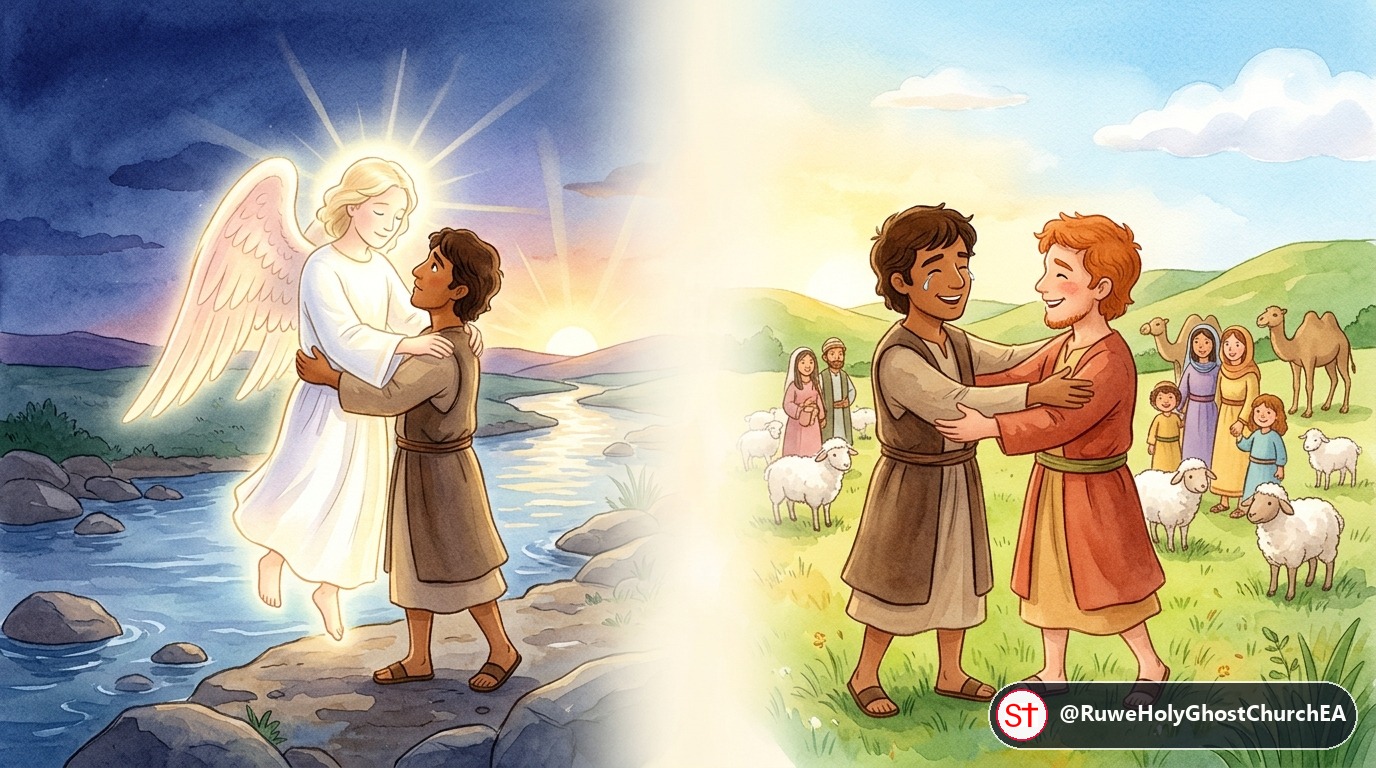
1. Key Bible Reading
Passage: Genesis 32:22 – 32:32 and Genesis 33:1 – 33:17 (also referencing Hosea 12:4 and Matthew 5:9, World English Bible – WEB).
Teachers and parents: Read Genesis 32:22–31 and Genesis 33:1–11 aloud with the children. Highlight Jacob’s earnest prayer of faith and Esau’s beautiful, forgiving embrace.
2. Memory Verse to Learn by Heart
“He said, ‘Your name will no longer be called Jacob, but Israel; for you have fought with God and with men, and have prevailed.’”
— Genesis 32:28 (WEB)
3. What We Will Learn Today
- How Jacob prepared to meet his brother Esau after twenty years apart, praying humbly to Yahweh and sending generous herds of livestock as peace gifts.
- How Jacob was left alone at night by the stream of Jabbok, and how a heavenly Messenger (the angel of God) wrestled with him until daybreak.
- Jacob’s persevering prayer of faith: “I will not let you go, unless you bless me!” (Genesis 32:26).
- How God changed Jacob’s name from Jacob (“deceiver / heel-catcher”) to Israel (“he who strives with God”), and named the place Peniel (“Face of God”).
- The joyful reunion: how Esau ran to meet Jacob, fell on his neck, kissed him, and they both wept tears of forgiveness, proving that God softens hearts through prayer and humble love!
4. The Complete Story of Jacob at Jabbok & Peace with Esau
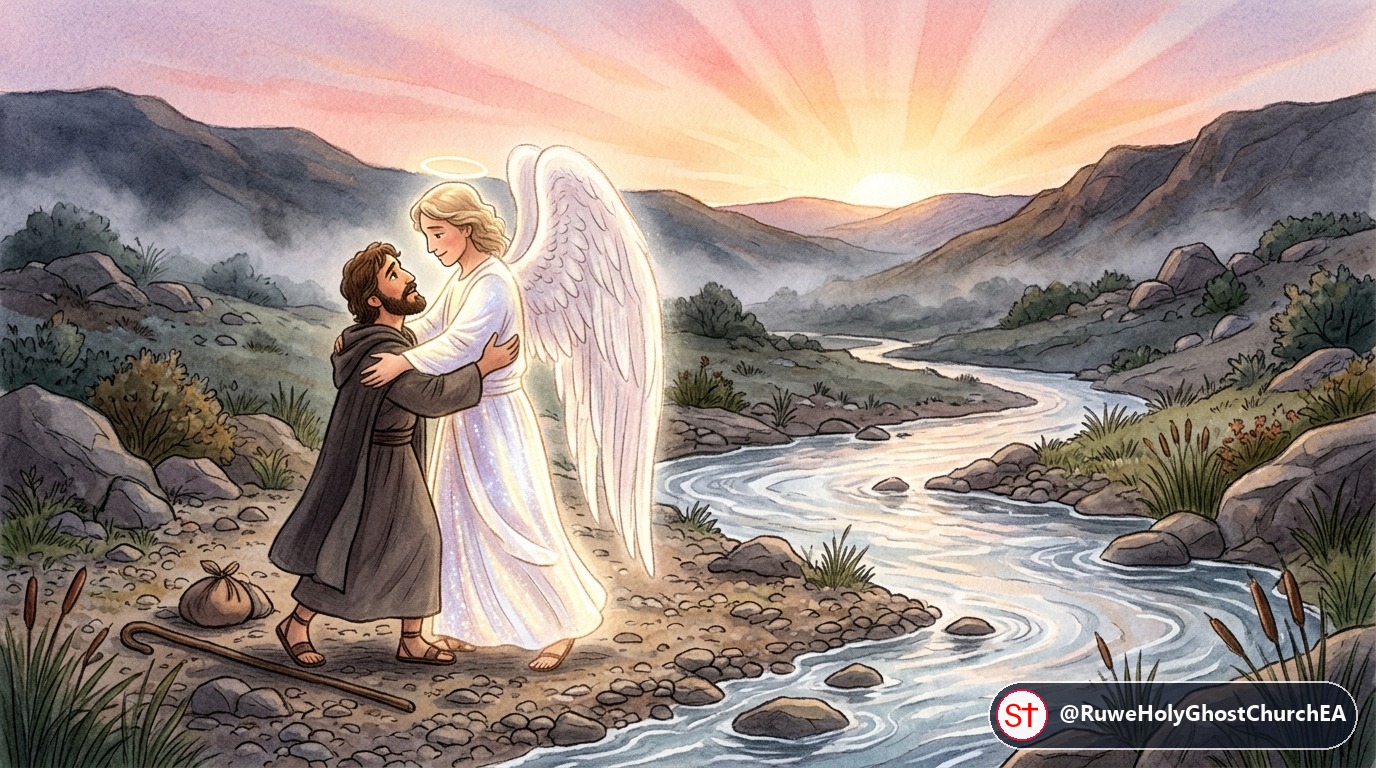
Part A: Alone by the River Jabbok & The Night of Wrestling (Genesis 32:22–26)
Jacob had spent twenty years working for Uncle Laban in Haran. Now God told him to return to the land of Canaan. But Jacob remembered how angry his twin brother Esau had been when Jacob stole the blessing. Jacob sent messengers ahead to make peace, but they came back with frightening news: “We came to your brother Esau. Not only that, but he comes to meet you, and four hundred men with him” (Genesis 32:6, WEB).
Jacob was greatly afraid and distressed. He prayed with a humble heart: “I am not worthy of the least of all the loving kindnesses, and of all the truth, which you have shown to your servant... Deliver me, please, from the hand of my brother” (Genesis 32:10–11, WEB).
That night, Jacob helped his two wives, two servant-women, eleven sons, and all his herds cross over the ford of the stream of Jabbok. Then Jacob went back across and was left completely alone in the dark:
“Jacob was left alone, and a man wrestled with him until the breaking of the day. When he saw that he didn’t prevail against him, he touched the hollow of his thigh, and the hollow of Jacob’s thigh was strained, as he wrestled with him. The man said, ‘Let me go, for the day breaks.’ Jacob said, ‘I will not let you go, unless you bless me.’” — Genesis 32:24–26 (WEB)
This was no ordinary wrestling match! The prophet Hosea explains that Jacob “had power over the angel, and prevailed. He wept, and made supplication to him” (Hosea 12:4, WEB). Even when his hip was strained and he was in physical pain, Jacob would not let go! He knew only God could give him the true blessing and protect his family.
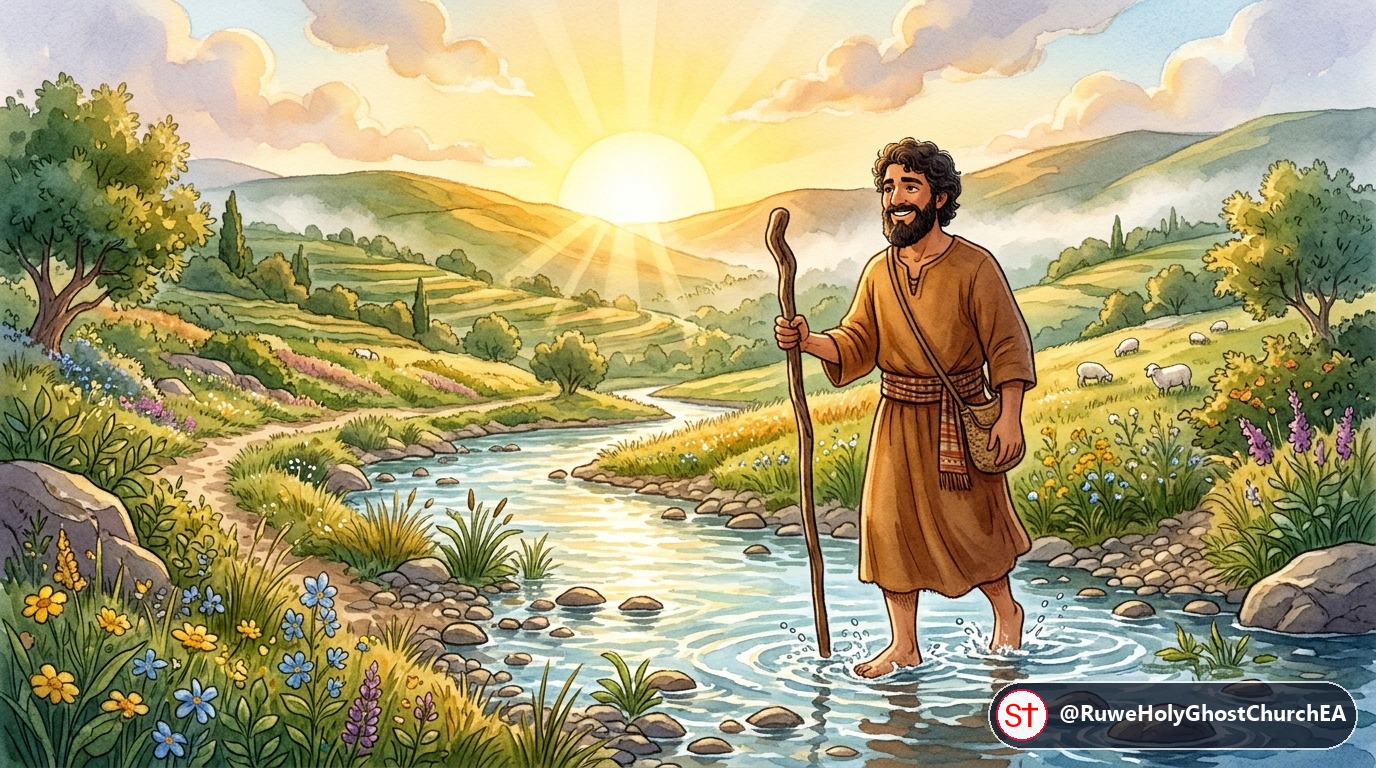
Part B: A Brand-New Name: Israel & The Sunrise at Peniel (Genesis 32:27–32)
The heavenly Messenger asked Jacob a profound question:
“He said to him, ‘What is your name?’ He said, ‘Jacob.’ He said, ‘Your name will no longer be called Jacob, but Israel; for you have fought with God and with men, and have prevailed.’” — Genesis 32:27–28 (WEB)
When Jacob answered “Jacob,” he was admitting who he had been: a trickster who grabbed his brother’s heel. But God gave him a brand-new identity! His new name was Israel, which means “He who strives with God” (or “Prince with God”). From that day forward, the descendants of Abraham and Isaac would be called the Children of Israel!
Jacob asked the Messenger’s name, and the Messenger blessed him right there:
“Jacob called the name of the place Peniel: ‘for I have seen God face to face, and my life is preserved.’ The sun rose on him as he passed over Penuel, and he limped on his thigh.” — Genesis 32:30–31 (WEB)
In Hebrew, Peniel (or Penuel) means “Face of God.” Jacob walked away with a limp, a reminder that his strength came from depending on God, not on his own clever tricks!
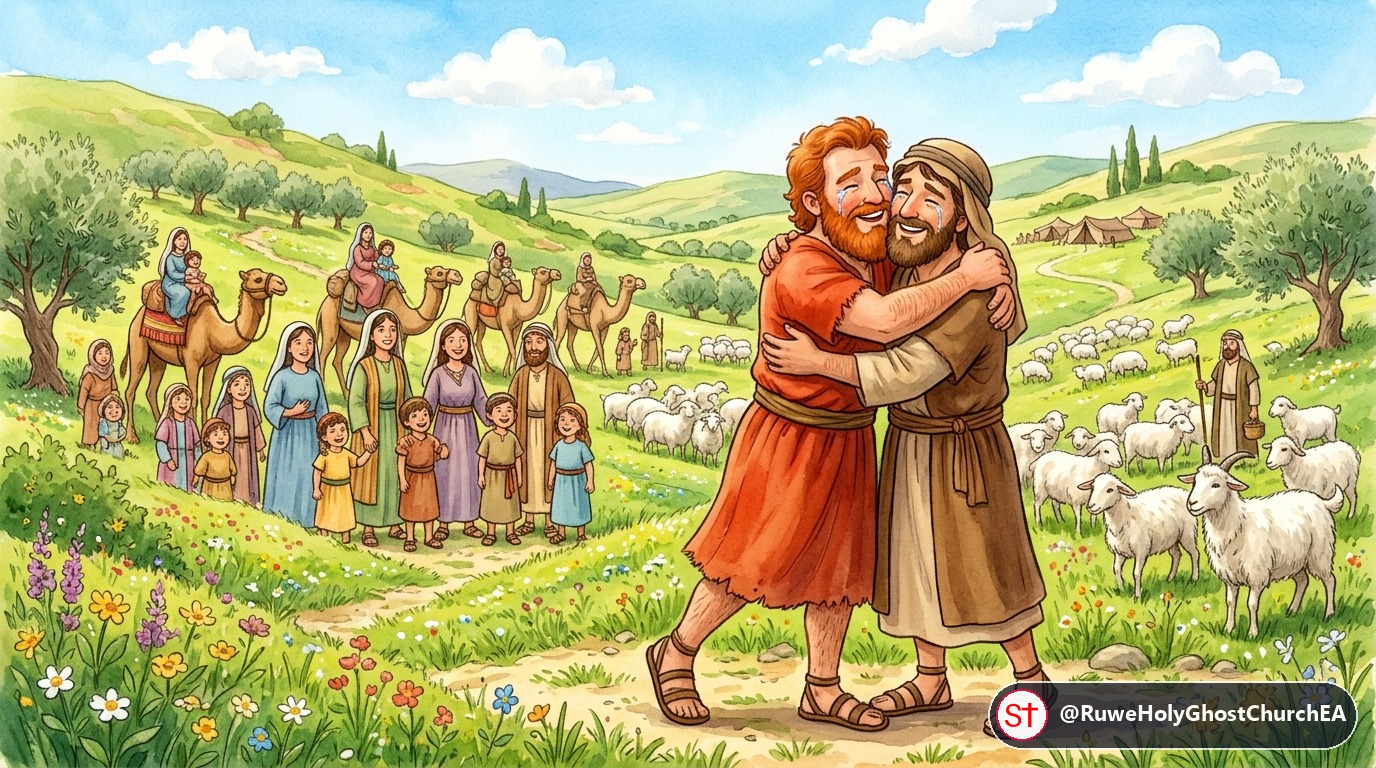
Part C: The Joyful Reunion: Brothers United in Peace (Genesis 33:1–17)
Later that morning, Jacob looked up and saw Esau arriving with four hundred men. Jacob walked ahead of his family and bowed down to the ground seven times to show deep humility and respect.
Would Esau attack? No! God had answered Jacob’s prayers and completely melted away Esau’s anger:
“Esau ran to meet him, embraced him, fell on his neck, and kissed him, and they wept. He lifted up his eyes, and saw the women and the children; and said, ‘Who are these with you?’ He said, ‘The children whom God has graciously given your servant.’” — Genesis 33:4–5 (WEB)
What a glorious, tearful reunion! The two brothers who had been separated by deceit and anger for twenty years were now holding each other in love and forgiveness! Jacob said to Esau:
“Please, no, if I have now found favor in your sight, then receive my present at my hand, because I have seen your face, as one sees the face of God, and you were pleased with me.” — Genesis 33:10 (WEB)
Seeing Esau’s welcoming, forgiving face was like seeing the loving face of God! Esau returned in peace to Seir, and Jacob travelled safely with his family into the land of Canaan. Jesus said: “Blessed are the peacemakers, for they shall be called children of God” (Matthew 5:9, WEB).
5. Quick Revision Table: Key Facts of Jacob at Jabbok & Peace with Esau (WEB)
6. Class Discussion Questions
- Why was Jacob so afraid when he heard that Esau was coming with 400 men (Genesis 32:6–7)? What did Jacob do with his fear?
- Why did Jacob say, “I will not let you go, unless you bless me!” (Genesis 32:26)? What does this teach us about persevering in prayer?
- What does the name “Israel” mean, and why did God give it to Jacob?
- When Esau saw Jacob, what did he do instead of fighting (Genesis 33:4)? How can we follow Esau’s example of choosing forgiveness over anger?
7. Fun Children’s Activity
Activity: “Hands of Peace & Forgiveness” Friendship Card
Materials needed: Drawing paper, pencil, scissors, and crayons.
- Trace Your Hands: Fold a piece of paper in half and trace your hand so the thumbs and index fingers touch the fold.
- Cut Out the Card: Cut around the outline (leaving the fold connected) so that when you open it, two hands are clasping each other in peace!
- Write Inside: On one hand write: “Forgive As God Forgave Us!” and on the other hand write our Memory Verse: “Your name will no longer be called Jacob, but Israel — Genesis 32:28 (WEB)”.
- Gift of Peace: Give this card to a family member or friend with a warm smile!
8. Closing Prayer
“Gracious Heavenly Father, thank You that You hear our prayers when we are afraid and that You transform our hearts just as You transformed Jacob into Israel. Thank You for the beautiful miracle of reconciliation between Jacob and Esau. Make each of us peacemakers in our homes, schools, and church. Give us tender hearts to forgive others and to live in unity and love. In Jesus’ mighty name we pray, Amen.”
Test Your Knowledge
Answer the 10 questions below to reinforce what you learned today.