Our Sacred History
The history of the Ruwe Holy Ghost Church of East Africa is one of prophetic revelation, spiritual sacrifice, and the ultimate victory of the Holy Spirit (Roho Maler).
Other relevant information about the History of RHGCEA
Early Prophetic Origins (1906-1934)
c. 1906/1907
The prophetic activity of Yohanna (John) Owalo set precedents for later spirit-centered churches.
c. 1912
The earliest 'Roho' manifestations were documented in the Ruwe locality, where Anglican catechists and prayer groups experienced possession and prophetic speech.
c. 1916-1918
The prophetic leadership of Alfayo Odongo Mango intensified, and his ministry became magnetically influential.
January 16, 1934
Coronation of Elijah Oloo as Kingi Mar Jorateng’ by Alfayo Odongo and others (It is said that he was given 300 strokes of cane). Later, raising a tri-color flag (black-white-red).
January 20-21, 1934
The Musanda Martyrdom... 9 believers were martyred (5 believers were burned and 4 believers were speared).
Our Founding Leaders
Our church is built on the ministry and sacrifice of two central figures:
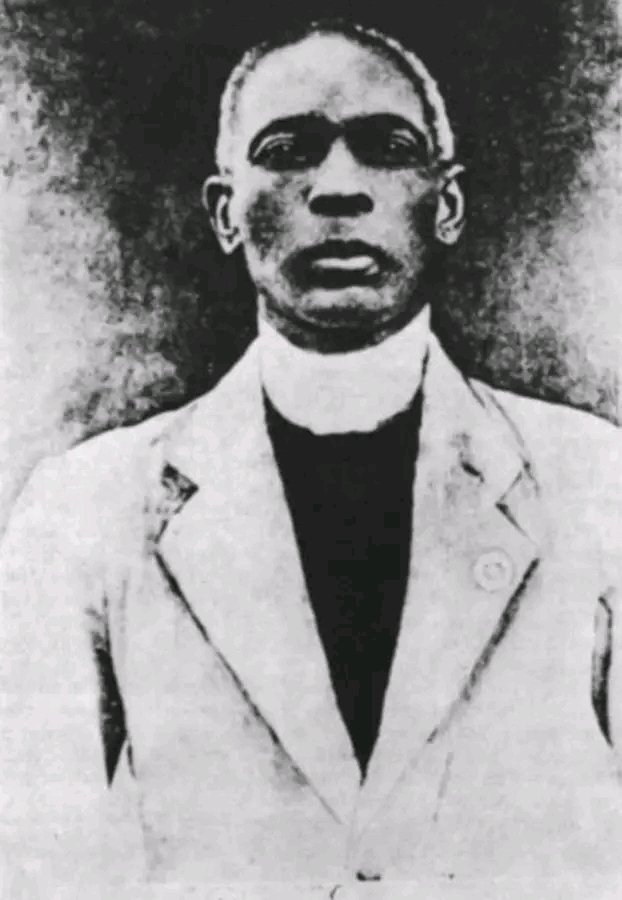
Alfayo Odongo Mango (c.1884 – 1934)
He is the Founder of all Roho Churches, including the Ruwe Holy Ghost Church EA. Born circa 1884, he was an Anglican catechist before a powerful spiritual transformation. His ministry emphasized healing the sick, interpreting visions, and organizing prayer assemblies. His authority rested on claimed revelations and his ability to produce the coherent liturgical corpus of Dhoroho (hymns and prayers).
Lawi Obonyo Ongwek (c.1904 – 1934)
Known as 'the Helper' (Jakony), Lawi Obonyo was a close relative and immediate follower of Mango. He was a key miracle-worker and charismatic young man (He is known for his quick response to call for the Good News about Roho. He even started spreading Roho Gospel when Alfayo Mango was still doubting). Before dedicating his life to the gospel, he worked as a Carpenter at Maseno.
Kingi Elija Oloo (d.1939)
On 15th January 1934, Elijah Oloo, an ex-army sergeant, was symbolically installed as the Kingi Mar Jorateng’ (also known as “King of the Black”) at Alfayo Odongo Mango’s home in Musanda. It is said that during the coronation, Elijah Oloo received 300 strokes of the cane, signifying purification and endurance. The following morning, a tri-coluor flag (black, white, and red) was raised.
The Musanda Events (January 1934)
The pivotal moment in our history occurred at Musanda.
Flag-Raising (January 16, 1934)
Under the leadership of King Elijah Oloo, followers raised a tri-color flag (black-white-red) as an act of religious identity and to symbolize that the end of colonial rule had begun.
The Musanda Martyrdom (January 20-21, 1934)
Tensions with neighboring groups and colonial authorities erupted in war. Assailants burned 17 houses in Alfayo Odongo's homestead, killing people inside and spearing others.
These deaths are commemorated as martyrdom, and this sacrifice became the central founding myth that legitimized Ruwe as the headquarters for the movement.
The Nine Martyrs of Musanda
We honour the memory of the nine who sacrificed their lives:
- Alfayo Odongo Mango (Burned 🔥) - Died 20-01-1934
- Salome Omondi (Burned 🔥) - Died 21-01-1934
- Zadock Aol (Burned 🔥) - Died 20-01-1934
- Pesila Adongo (Burned 🔥) - Died 20-01-1934
- Joel Owino (Son of Lawi Obonyo) (Burned 🔥) - Died 20-01-1934
- Lawi Obonyo Ongwek (Speared 🏹) - Died 21-01-1934
- Turfosa Aloo (Speared 🏹) - Died 21-01-1934
- Musa Muga Oduma (Speared 🏹) - Died 21-01-1934
- Isaka Obayo (Speared & Burned 🏹 🔥) - Died 20-01-1934
Reorganization at Ruwe (1934)
In the aftermath of the martyrdom/massacre, the surviving Roho adherents regrouped at Ruwe. Barnaba Waluoho Ojoro (c.1898 – 1980) emerged as the “Jatelo” (Leader). He was chosen by the elders to lead the community's reconstruction and became the first bishop of the Ruwe Holy Ghost Church.
Bishop Barnaba is credited with consolidating liturgical practices, preserving the Mango-era hymns, and establishing Ruwe as the headquarters. He also formalized the registration of the church in Kenya in 1972.
The Prophecies of Lawi Obonyo
The prophecies of Lawi Obonyo are a key part of our heritage and vision:
- The black shall rule themselves.
- Colonials shall go back to their counties without gunshots/battles.
- The flag of the Black shall be high while the flag of colonials shall be lowered.
- The head of the black will be printed on money.
- Shield, Cock, and Axe will be components in the Kenyan Coat of arms.
- The black shall be educated... They will work in big offices.
- They will come back and build a church with 12 doors.
- Oil will be oozing from our hills (this prophecy hasn't been fulfilled).
Leadership Succession at Ruwe Headquarters
Our church has been guided by a stable succession of leaders:
Barnaba Waluoho Ojoro
First Bishop, 1934 - 1980
Musa Ochieng' Ojoro
Second Bishop, 1980 - 1991
Mathayo Ndolo
Third Bishop/Archbishop, 1992 - 2002
Hezron Okiri Koyo
Interim Archbishop, 2002
Daniel Were Ohola
Fourth Archbishop, 2002 - Present